
Halloween can ask a lot of a child at once
Halloween is meant to be fun, but it also brings a lot of change into one evening. Costumes feel different, the streets are busier, people knock on doors, it gets dark early and there can be a huge amount of excitement before you have even left the house.
In our family, we have found that the evening tends to go better when we think less about making Halloween perfect and more about making it predictable and comfortable.
5 things that can help
1. Talk through what is going to happen
We find it helps when our child knows roughly what the evening will look like. We might explain when we are leaving, who we are going with, the streets we are likely to visit and that we can come home whenever we have had enough.
2. Let comfort win
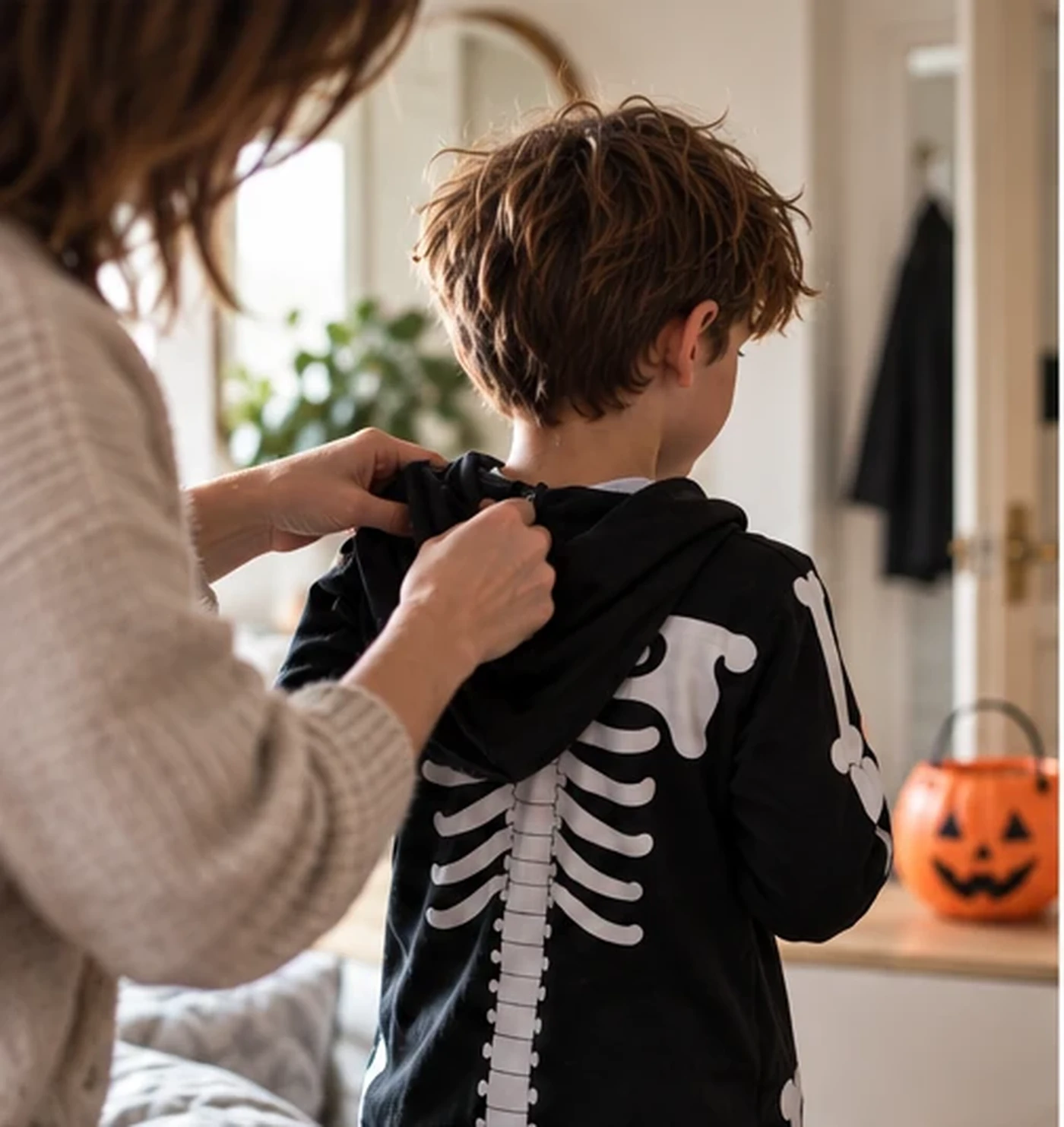
A costume can look brilliant and still feel awful after twenty minutes. Masks, face paint, scratchy fabric, hoods and bulky accessories can all become much more noticeable once a child is hot, excited or tired. We would rather change the costume than spend the evening persuading our child to tolerate it.
3. Take something familiar
A favourite fidget, ear protection, a familiar snack or another small comfort item can come along too. Sometimes simply knowing it is there is useful.
4. Build in an easy escape route
We try not to make a certain number of houses the measure of a successful evening. We can skip a noisy house, stand back for a minute or head home earlier than planned.
Going home early doesn’t mean Halloween went wrong.
5. Remember the excitement can catch up afterwards
Even when Halloween has gone brilliantly, there has still been a lot to process. We try to keep the end of the evening gentle: home, comfortable clothes, something familiar and not too many extra demands.
A good Halloween can be a smaller Halloween
Some years might mean lots of trick-or-treating. Another year might mean one street and home. What matters to us is that our child gets to enjoy Halloween in a way that still feels manageable for him.
This is our family’s experience rather than medical advice, and every child is different. We share what has helped us in the hope that it gives other families a few useful ideas.