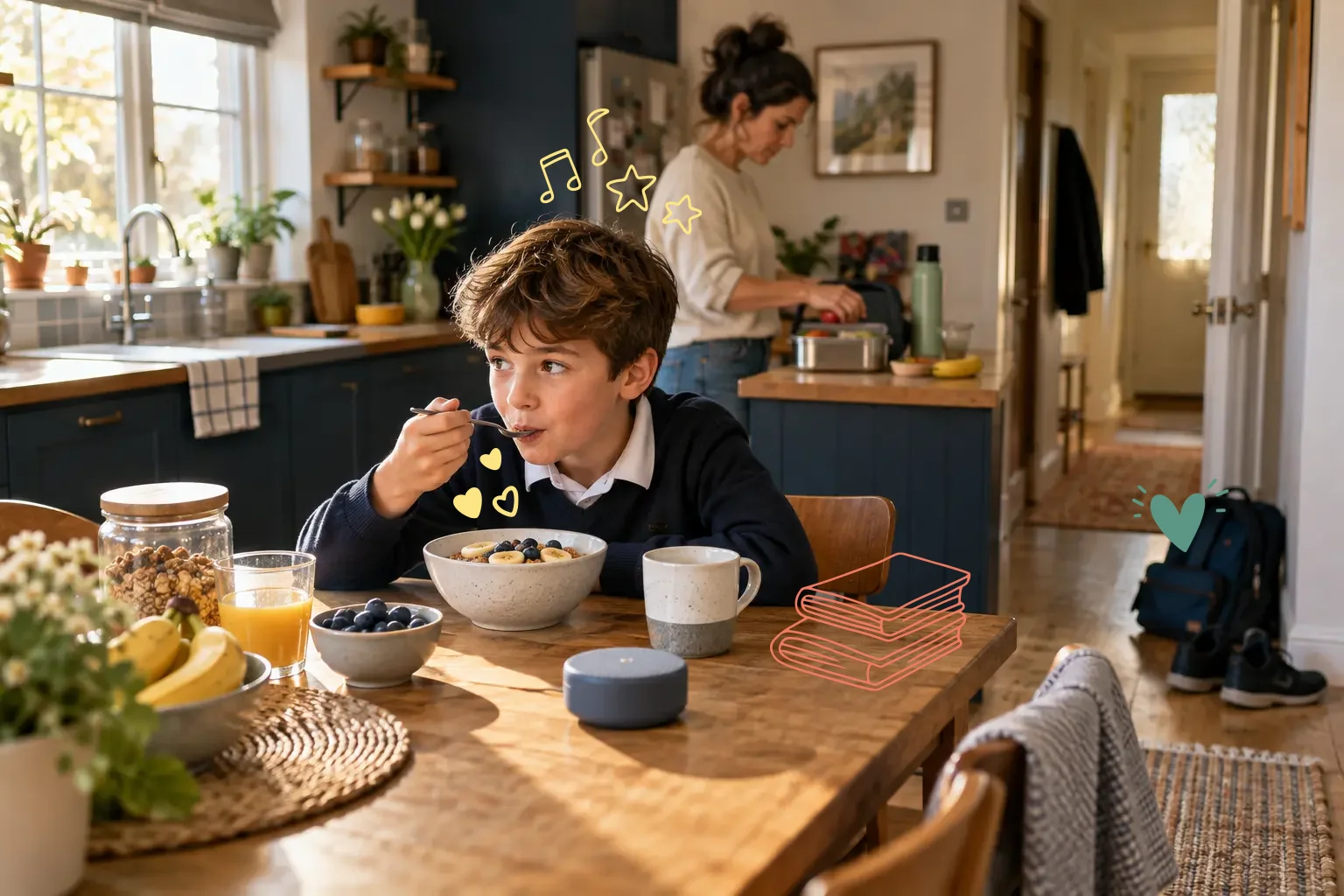

Why homework can feel difficult
For our child, the hardest part of homework is not always the work itself. It can be stopping another activity, sitting down, beginning the first question and staying with it when something feels difficult.
Hunger and tiredness make everything harder. Seeing too much work at once can feel overwhelming, while one difficult question can quickly knock confidence.
We have found that repeated reminders rarely help. Neither does correcting every mistake immediately or trying to push through when frustration has already taken over.
Instead, we try to make the transition clearer, the task smaller and the experience less open-ended.
1. Meet the physical need first
We rarely expect homework to happen immediately after school.
Our child is much more likely to struggle if he is hungry, tired or still carrying the pressure of the school day. A snack or meal usually comes first, followed by an opportunity to move or spend some time outside.
This is not about making children “earn” a break before working. It is about recognising that concentration is harder when the body needs something else.
Some days the pause can be short. On other days, homework may need to wait longer. We find it more helpful to notice how our child is doing than to insist on starting at exactly the same time every day.
If the transition home is particularly difficult, our guide to helping an ADHD child reset after school includes some of the gentle ways we approach that part of the day.
2. Make the transition visible
Repeatedly saying “It’s time to do your homework” can turn one request into a long trail of reminders.
A visible timer or countdown works better for us because it makes the transition less dependent on another verbal instruction. Our child can see that the current activity is ending and that homework is coming next.
We also try to give homework a visible ending. An open-ended session can feel much bigger than a short, clearly defined piece of work.
When the timer ends, we begin alongside him rather than sending him to get started alone. Sitting down together removes one more step from the process and makes the beginning feel less abrupt.
The timer does not guarantee a smooth transition every time. It simply makes what is happening next a little more predictable.
3. Show only the next manageable step
A full worksheet, several spellings or a screen containing multiple activities can make the workload feel bigger than it is.
When possible, we reduce what is visible and focus only on the next small part. That might mean covering the rest of a worksheet, choosing a few spellings at a time or looking only at the first online activity.
If the first question feels difficult, we complete an example together. We are not trying to provide the answer. We are helping make the instruction clearer and showing what beginning looks like.
Once the first step has been completed, the next one often feels less daunting.
Clear, simple instructions and shorter sections with breaks are also included in the NHS guidance for supporting children with ADHD.
4. Let the body move while the brain works
Concentrating does not always look like sitting completely still.
Our child may need to shift position, stand up or take a short movement break before returning to the task. Trying to stop every movement usually creates another thing for him to think about.
A wobble cushion has given him a way to move while remaining in roughly the same place. It does not create concentration by itself, but it can make sitting at the table feel more comfortable.
We also allow short breaks when we notice his attention slipping. A little movement can be more useful than repeatedly asking him to focus.
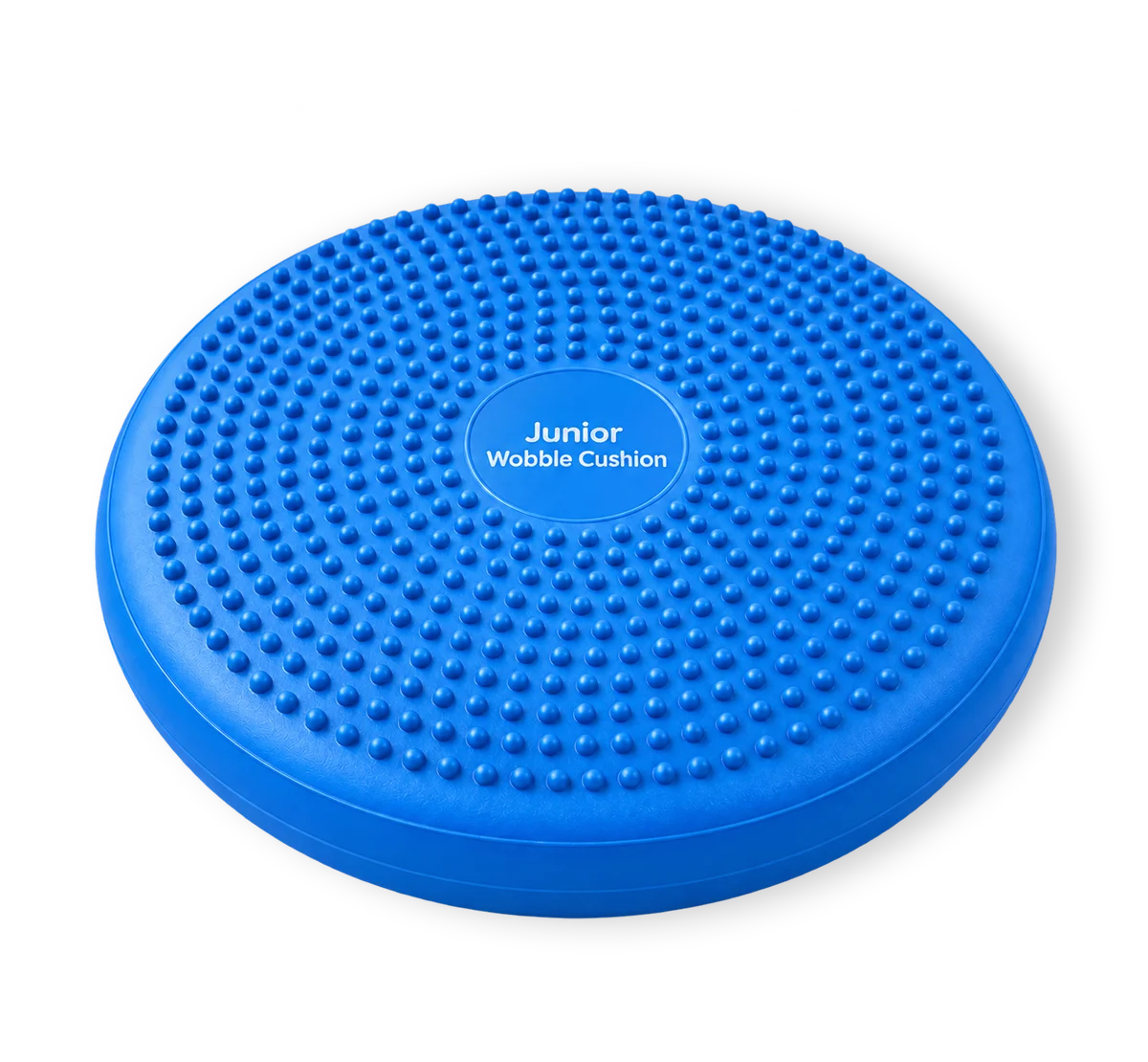
A textured cushion that allows small movements while a child works at a table. It may suit children who find a completely still chair uncomfortable, although not every child will find movement helpful.
View on AmazonFor more active ideas, see our movement breaks for children who find sitting still difficult.
5. Protect confidence when something feels difficult
One difficult question can quickly change the mood of the whole session.
When our child makes a mistake, we try not to correct it immediately. We first notice the effort, acknowledge what he has already managed and help him decide what to try next.
Praise works best for us when it is specific: “You got started even though that felt difficult.” “You came back after your movement break.” “You kept trying when the first answer did not work.”
If he becomes overwhelmed, continuing at all costs is rarely productive. We pause, move away from the task and return only when he is ready.
The aim is not perfect homework completed without support. It is helping him experience difficulty without feeling that the difficulty means he cannot do it.
The goal is not perfect homework. It is helping a child begin without homework becoming the hardest part of the evening.
What has not helped us
We have learned just as much from the things that make homework harder.
Starting when our child is hungry or tired usually creates frustration before the work has begun. Repeated verbal reminders add pressure without making the next step clearer.
Correcting every mistake as it happens can make him reluctant to continue, while an open-ended session makes the workload feel impossible to judge.
Most importantly, pushing through when he is already overwhelmed rarely leads to useful learning. At that point, a pause is often more valuable than another question.
Keep it flexible
Reading, spellings, times tables and online homework can each require something slightly different. A strategy that works one evening may be less helpful the next.
We try to keep a small collection of options available: food, movement, a visible countdown, a smaller first step, flexible seating and encouragement.
The useful part is not following every idea perfectly. It is noticing what is making the task difficult today and removing one obstacle where we can.
If homework regularly causes significant distress, or the amount or instructions feel unmanageable, it may be helpful to speak to your child’s teacher or SENCO about appropriate support.
Looking for something else?
Browse our parent-led recommendations for focus, routines, movement, calm and everyday family life.
Browse Focus and Study recommendationsThis is parent-led general information rather than medical or educational advice, and every child is different. This article contains an affiliate link. If you buy something through this link, we may receive a small commission at no extra cost to you. Read our affiliate disclosure.