
Why making time visible can help
“Five more minutes” sounds simple, but it still asks a child to picture something they cannot see. We started using a visual timer because repeated time warnings were not making transitions any easier in our house. We were still the ones announcing ten minutes, five minutes and two minutes, and our child was still being asked to hold that information in his head while doing something else.
A visual timer moves some of that information out of the conversation and into the room. The remaining time is there to glance at. For us, that has been useful before leaving the house, during short pieces of learning and when something enjoyable needs to come to an end.
What is a visual timer?
A visual timer shows time passing rather than only displaying a number. On the timer we use, a coloured section gradually disappears as the minutes pass. That means our child can see the difference between “quite a while left” and “nearly finished” without repeatedly asking us.
It is not a magic fix for transitions, and we do not use it for everything. Its value for us is much simpler: it makes an invisible idea more concrete.
Where we actually use ours
Getting out of the house
About 30 minutes before we need to leave, we can set the timer and let it become the shared reference point. We still help and remind, but we do not need to provide a running commentary on the clock.
Short pieces of homework or learning
“Do your homework” can feel enormous. A short visible block feels more finite. We would rather agree on a manageable period, then pause, than turn the whole evening into one long battle over concentration.
Screen transitions
We find transitions easier when the ending is not sprung on our child. A visible countdown can sit alongside the warnings and routine we already use around screens. It does not remove disappointment, but it makes the end less sudden.
The visual timer we use
We use the Time Timer MOD. We like the simplicity of it: there is no complicated setup and our child can understand the display at a glance. It is also small enough to move around the house rather than becoming a fixed part of one room.
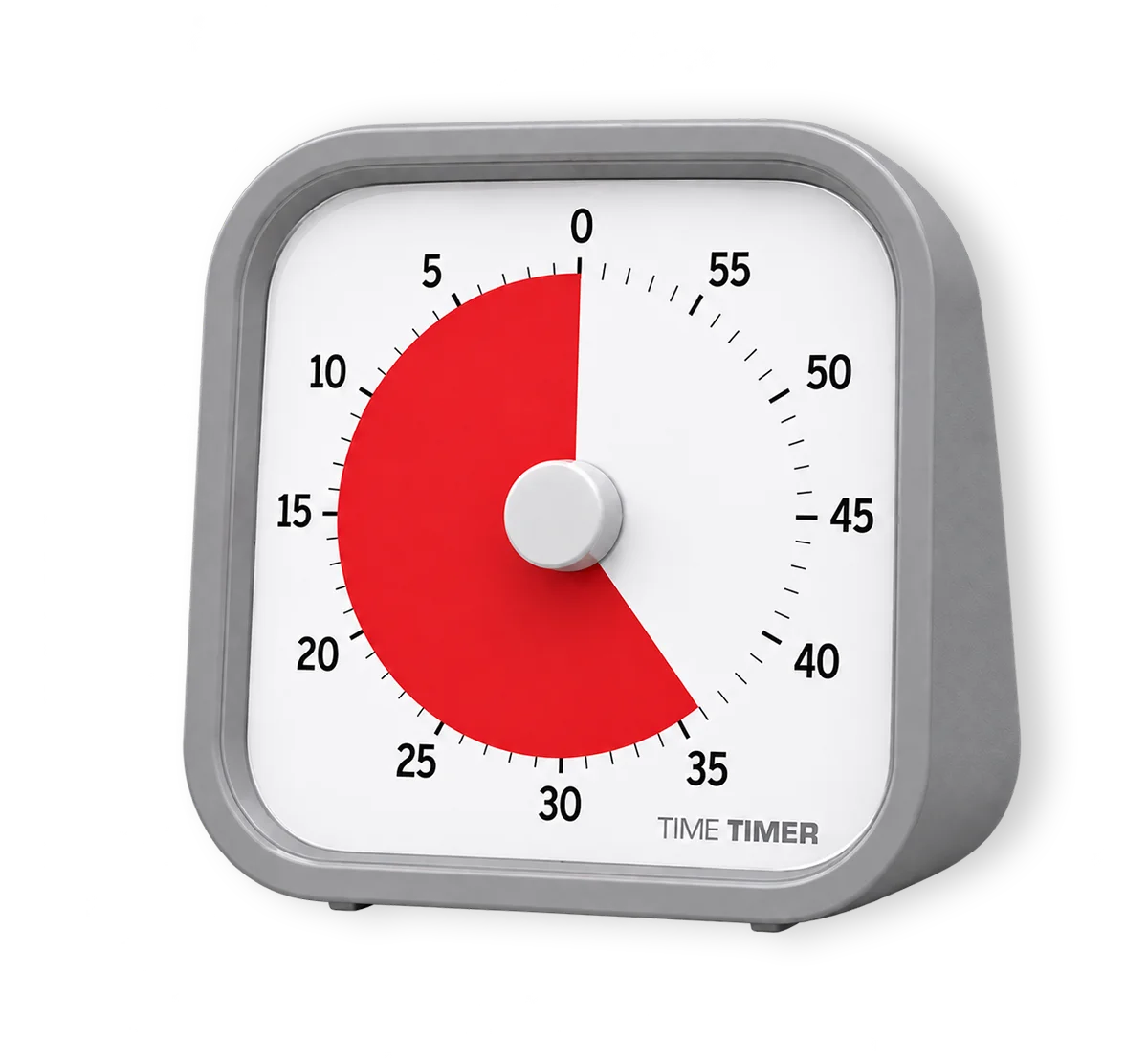
A simple visual countdown that makes the remaining time easy to see.
View on AmazonWhat we like
It is clear, portable and does one job. Most importantly, it reduces the need for us to keep saying how much time is left.
What we would keep in mind
A countdown can feel helpful in one situation and pressurising in another. We would not introduce it in the middle of an already difficult moment. We have found it works best when the child knows why it is being used and what will happen when it finishes.
A timer will not suit every child or every moment
Some children may find watching time disappear stressful. If a timer starts creating more tension than it removes, that is useful information rather than a reason to push harder. Try a different situation, use a gentler cue, or step away from the timer altogether.
For routines made up of several jobs, we often want the child to know what comes next rather than how many minutes remain. That is where a visual routine can be more useful.
When a routine chart works better
A routine chart answers a different question. The timer says “how long?” while the chart says “what next?”. For busy mornings and bedtime, that distinction matters. Instead of remembering a spoken list, our child can see the sequence and move through it one step at a time.
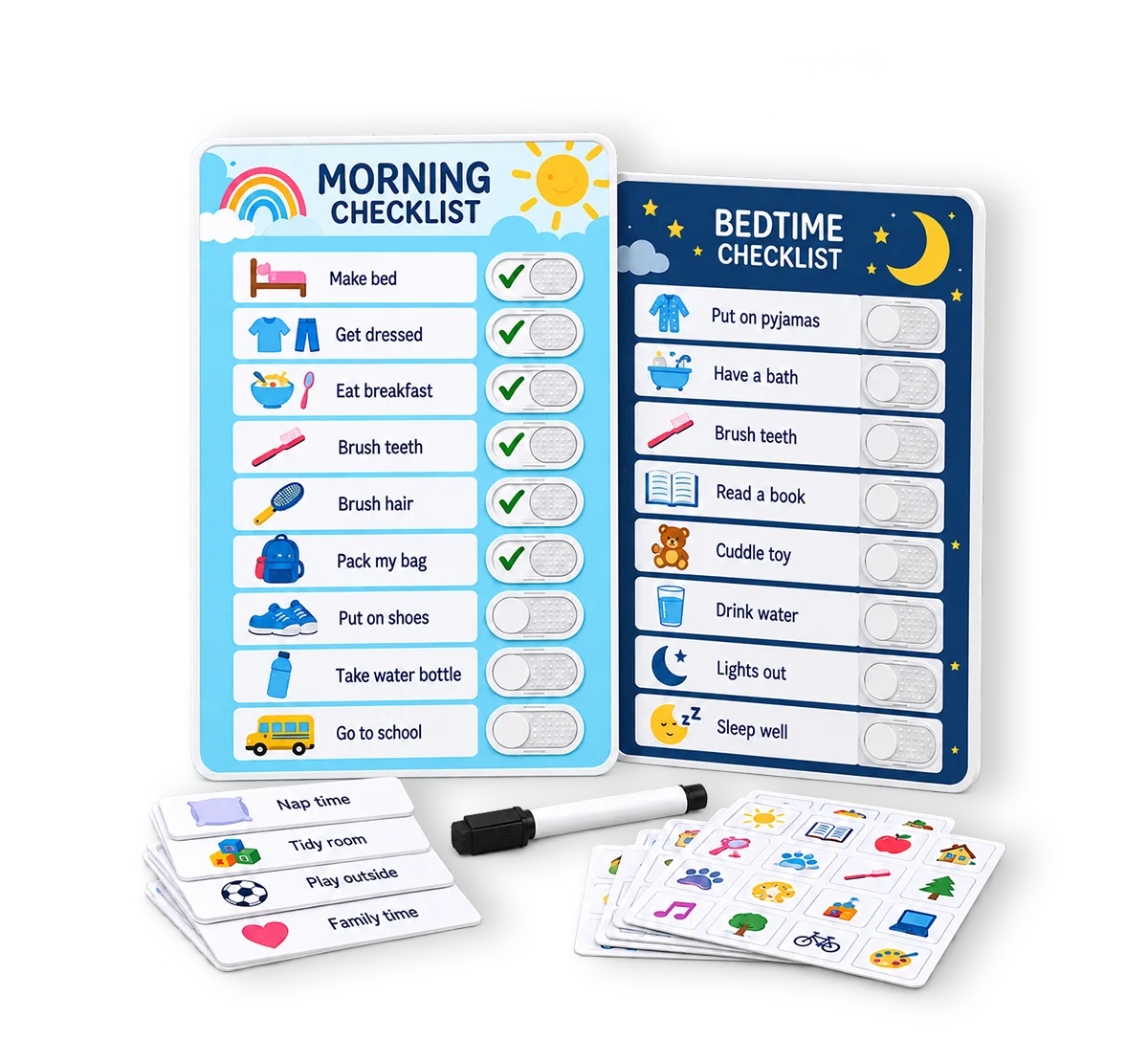
A visible sequence for the moments when knowing the next step matters more than watching the clock.
View on AmazonThe useful tool is the one that removes pressure, not the one that gives us another rule to enforce.
How we would start
Pick one moment that already happens every day and explain the timer before you need it. Let your child help set it. Keep the first countdown comfortably achievable and make the ending predictable: when the red section disappears, we put shoes on; when the short work block ends, we take a movement break.
That gives you a chance to see whether making time visible is genuinely useful for your child before trying to use a timer everywhere.
This is our family’s experience rather than medical advice, and every child is different. This article contains affiliate links. If you buy something through one of these links, we may receive a small commission at no extra cost to you. Read our affiliate disclosure.