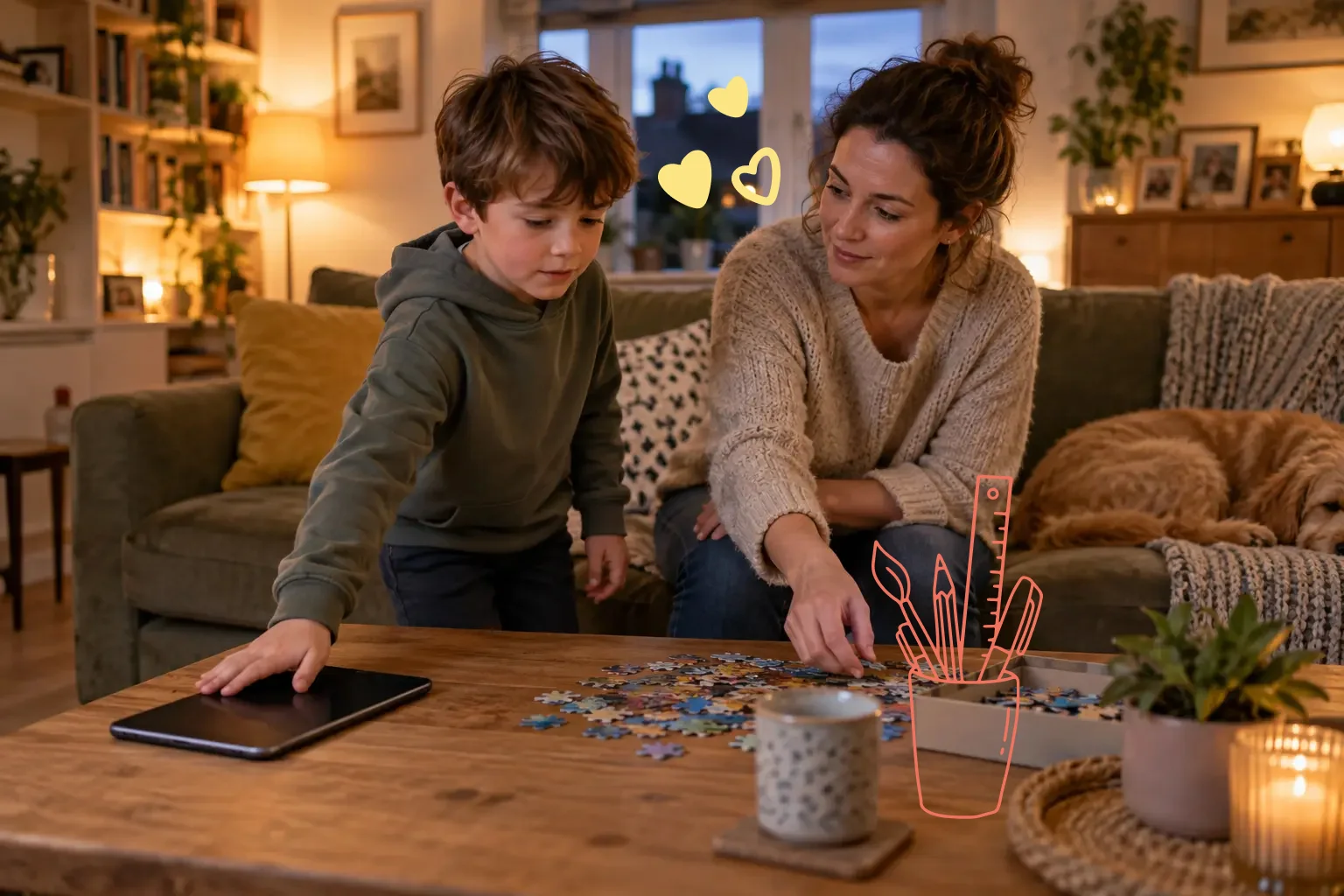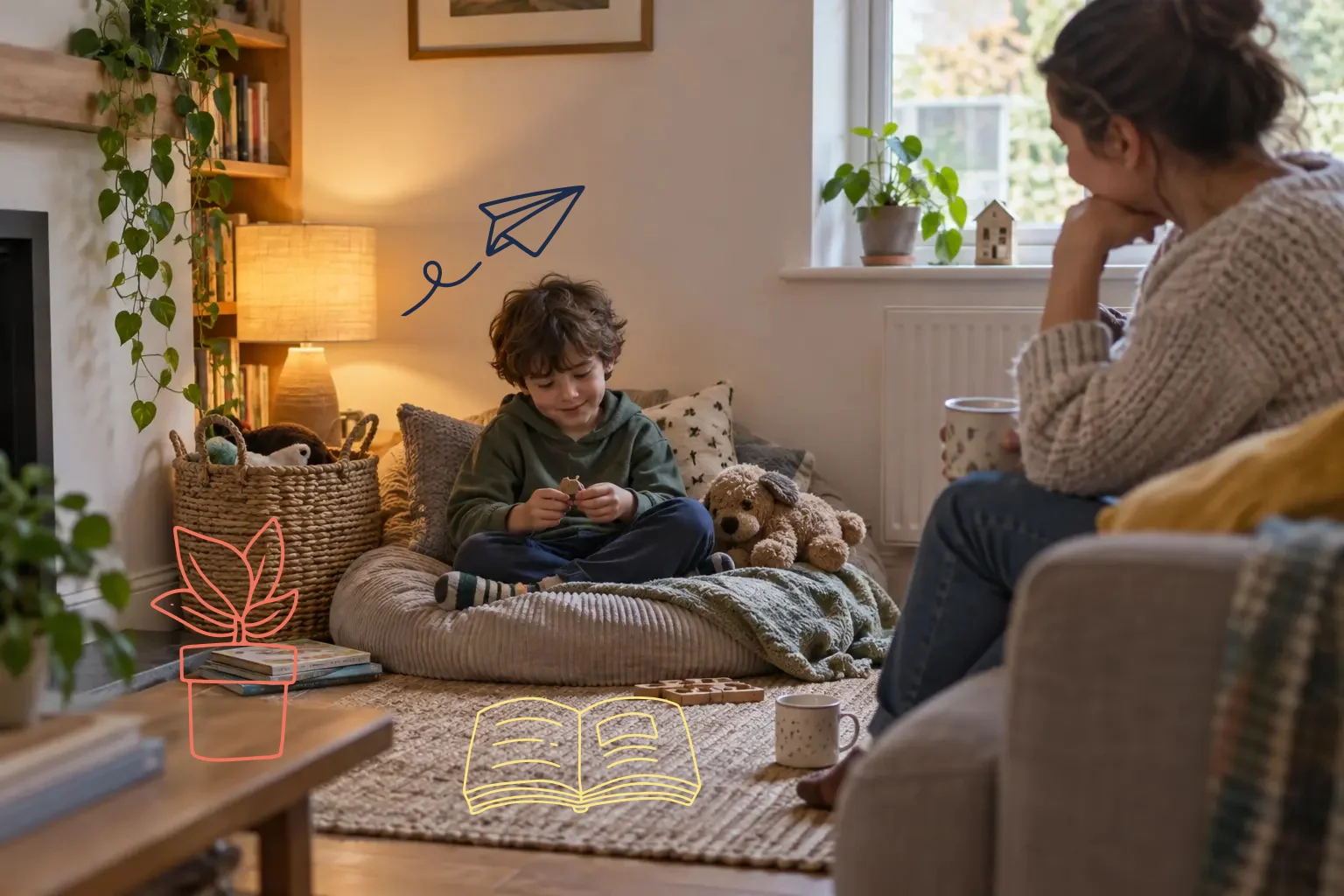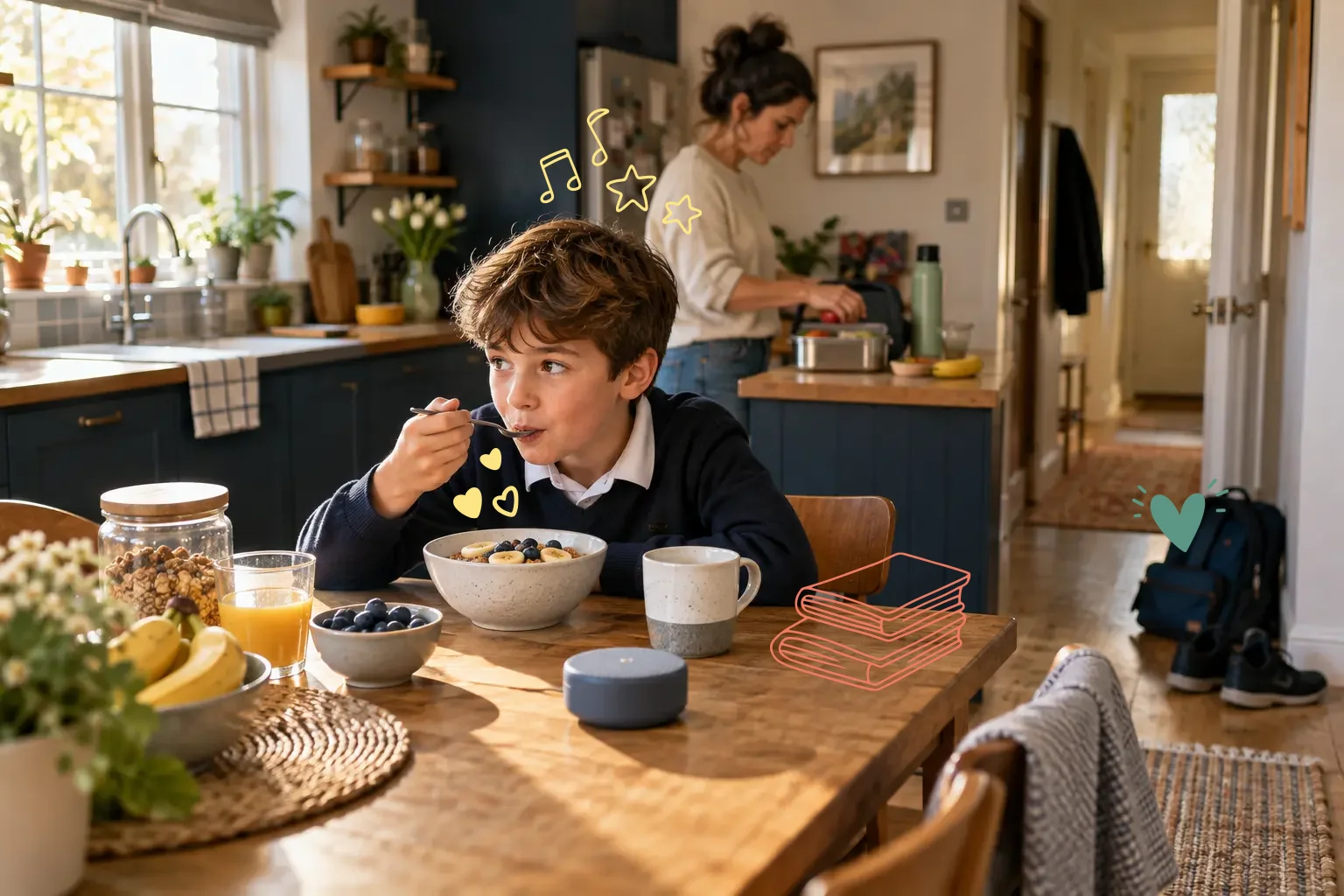
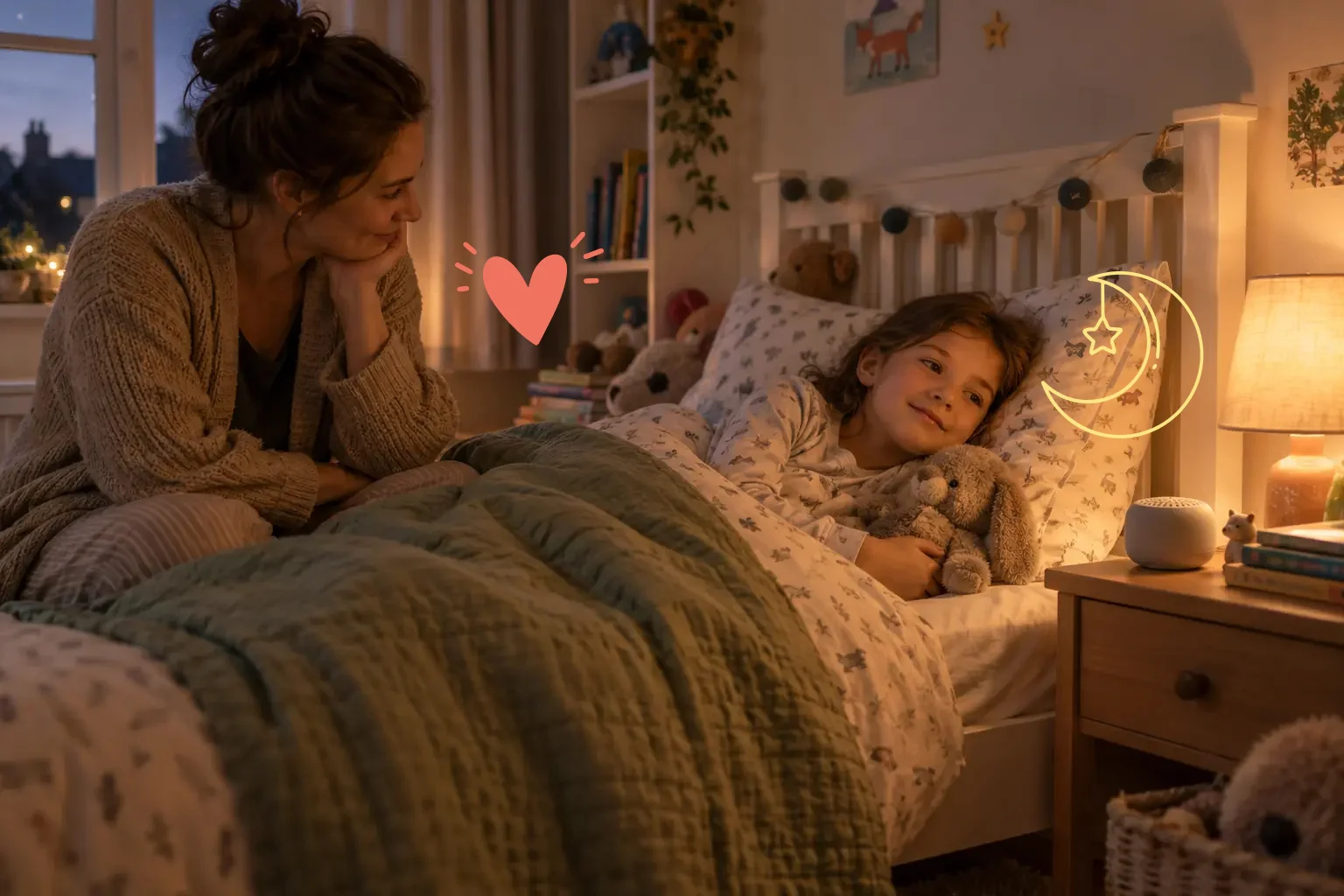
Why this moment can feel difficult
When a child’s mind is still busy, “go to sleep” is an impossible instruction. We focus instead on the steps that come before sleep: reducing decisions, lowering stimulation and repeating familiar cues.
The same sequence will not guarantee the same result every night. It simply gives the evening a shape that the child can begin to recognise.
1. Keep the sequence visible
A visual routine can hold the order of the evening so the adult does not have to repeat every instruction. Keep it short enough that the finish still feels reachable.
The 2-in-1 Routine Chart includes morning and bedtime options. Choose only the steps your family actually uses and allow flexibility when the evening changes.
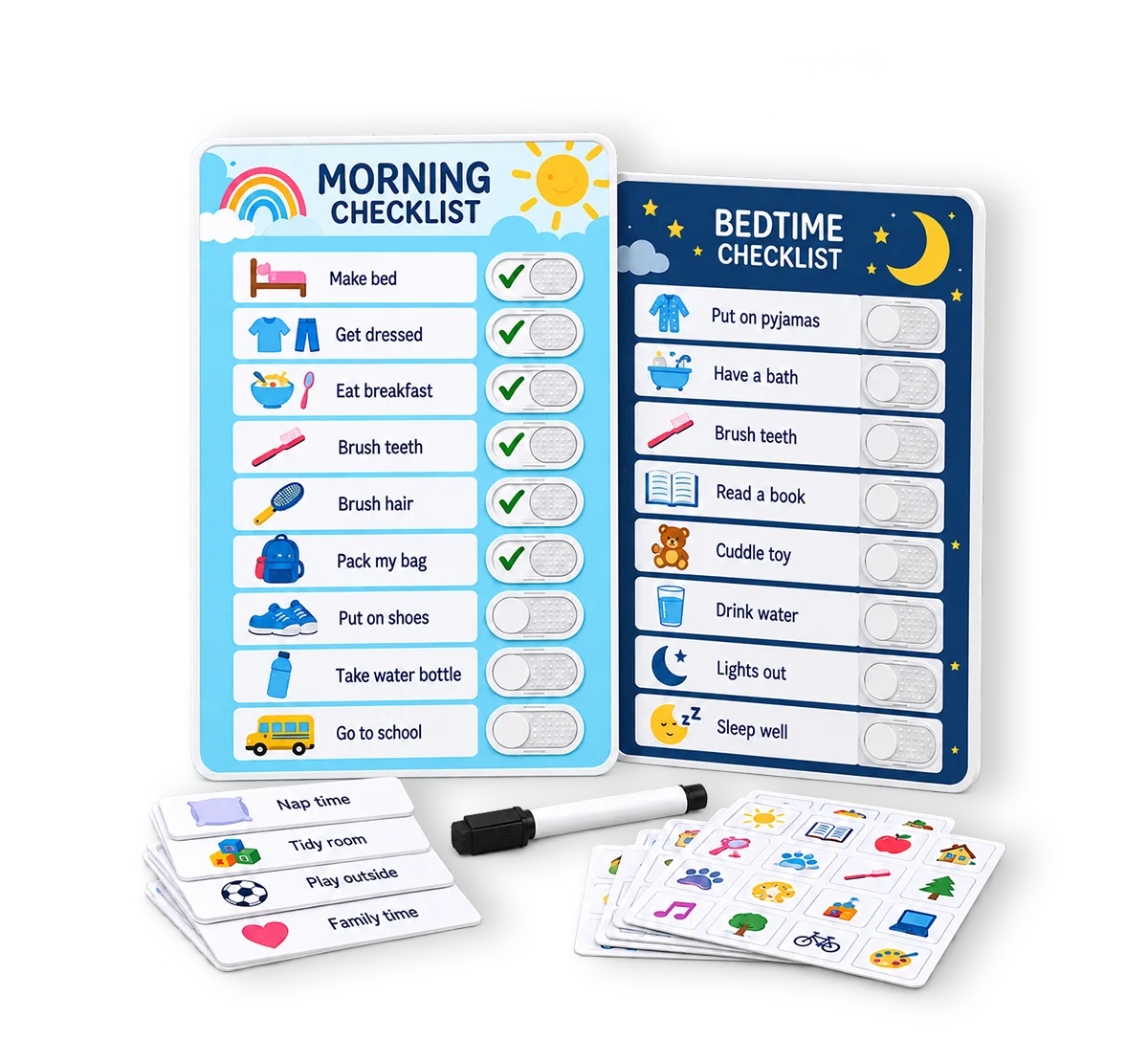
A visual checklist that can show what comes next without another string of spoken reminders.
View on Amazon2. Swap bright screens for a familiar story
A known audio story gives the mind something gentle to follow while the room becomes quieter. Familiarity often matters more than having endless new choices.
The Yoto Mini can play stories without a bright interactive screen. Set the volume before settling and choose the card earlier in the routine to avoid bedtime negotiations.
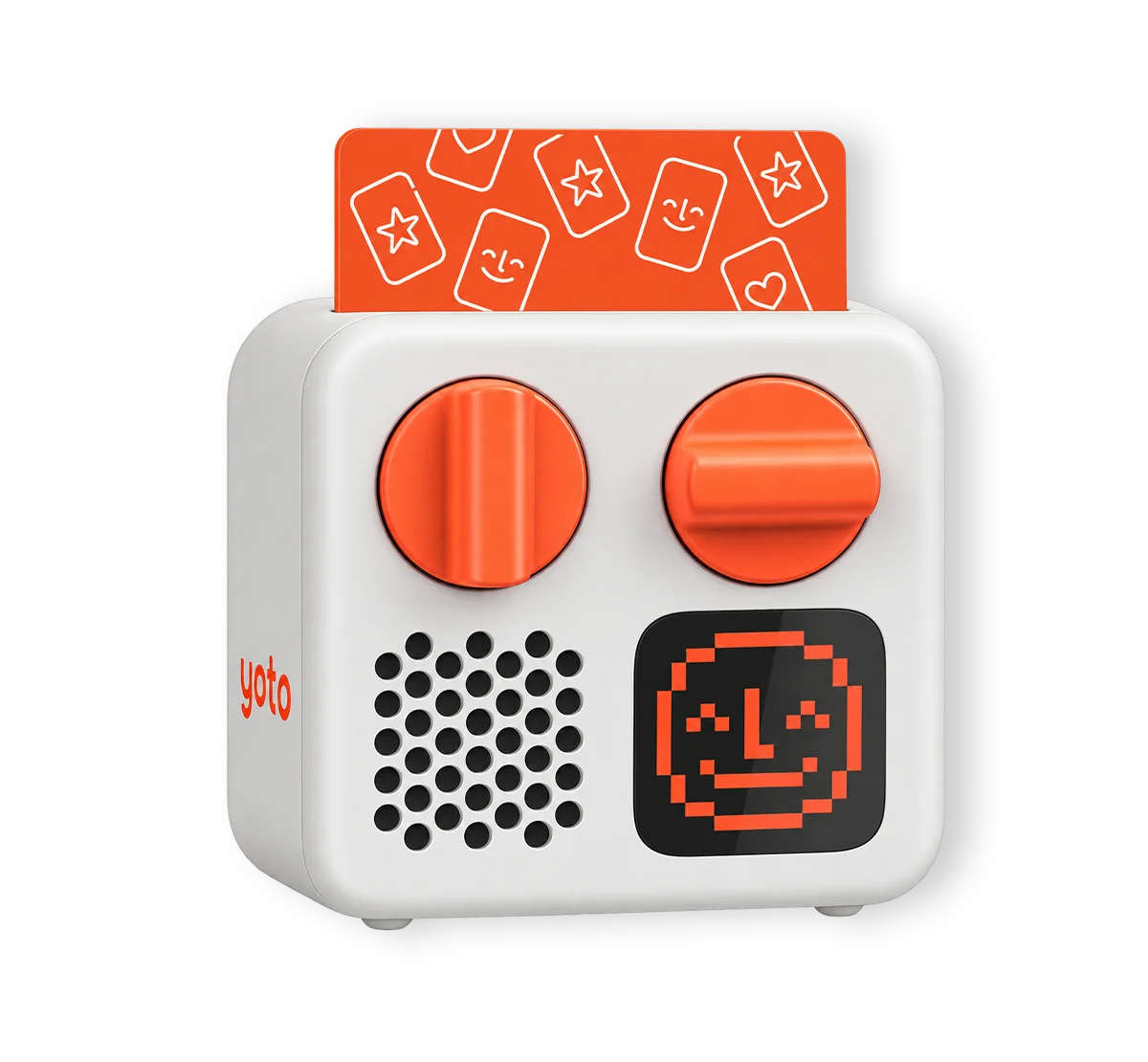
Familiar stories and music without adding another glowing screen to the bedroom.
View on Amazon3. Use a physical breathing rhythm
A child may find a movement easier to copy than a spoken instruction to relax. A slow tactile rhythm can become one optional cue within the routine.
Moonbuddy guides the hands through paced movement. Practise in the daytime first and stop if focusing on breathing makes the child uncomfortable.

A handheld guide that makes a slow breathing rhythm more concrete.
View on Amazon4. Let lingering thoughts leave the head
Some children become talkative as soon as the light goes off. A short journal moment earlier in the evening can give worries, ideas or good moments somewhere to land.
The HappySelf Junior Journal provides prompts that are easier than a blank page. Keep it optional and brief so it does not become another bedtime demand.
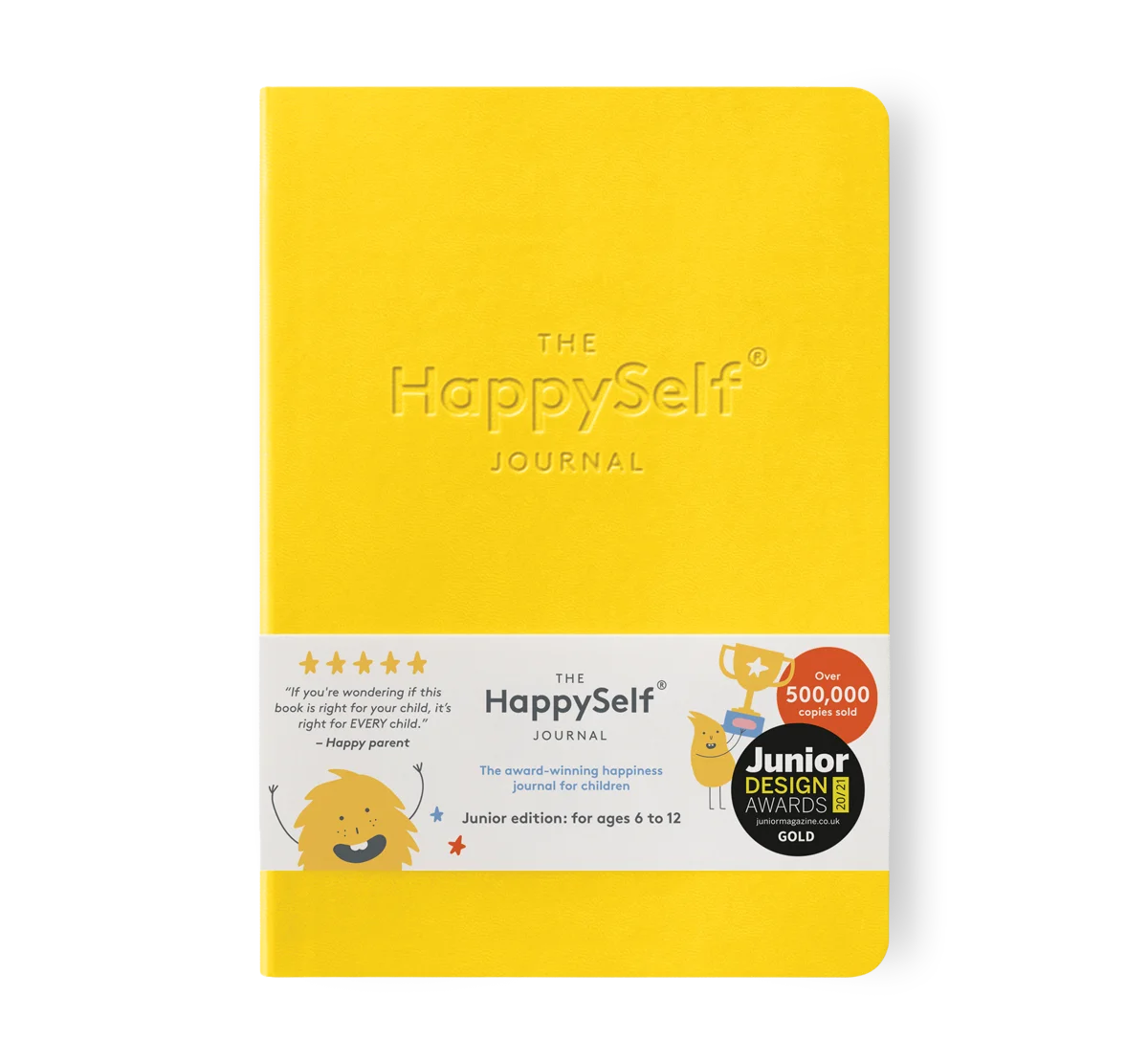
Short guided prompts for children who enjoy writing or drawing before the final bedtime steps.
View on AmazonWe cannot force sleep, but we can make the path towards rest feel more predictable.
Keep it flexible
Sleep difficulties can have many causes, and persistent problems are worth discussing with an appropriate healthcare professional. Products should not be presented as treatments or guarantees.
For us, a calmer bedtime means fewer surprises and less pressure, not a child who falls asleep at exactly the same minute every night.
Looking for something else?
Browse all of our parent-led product recommendations for routines, focus, calm, movement and sleep.
Browse all recommended productsThis is parent-led general information rather than medical advice, and every child is different. This article contains affiliate links. If you buy something through one of these links, we may receive a small commission at no extra cost to you. Read our affiliate disclosure.